


In the dynamic landscape of modern technology, Radio-Frequency Identification (RFID) has emerged as a transformative force, revolutionizing industries ranging from retail and logistics to healthcare and manufacturing. At the heart of this innovation lies the need for materials that can effectively interact with radio frequencies, enabling seamless data transmission and identification. As a leading supplier of Conductive Non Woven, I am often asked whether our product can be used in RFID technology. In this blog post, we will delve into the technical aspects of RFID, explore the properties of Conductive Non Woven, and evaluate its potential applications in this exciting field.

Understanding RFID Technology
RFID technology operates on the principle of electromagnetic fields to automatically identify and track tags attached to objects. These tags contain electronically stored information that can be remotely read by RFID readers without the need for direct line-of-sight contact. There are two main types of RFID tags: passive and active. Passive tags do not have an internal power source and rely on the energy transmitted by the RFID reader to power their operation. Active tags, on the other hand, have their own power source, typically a battery, which allows them to transmit signals over longer distances and with greater power.
The performance of an RFID system depends on several factors, including the frequency of operation, the design of the tag antenna, and the material properties of the tag and its surroundings. Different frequencies are used for different applications, with low-frequency (LF) systems operating at 125 - 134 kHz, high-frequency (HF) systems at 13.56 MHz, and ultra-high-frequency (UHF) systems at 860 - 960 MHz. Each frequency band has its own advantages and limitations in terms of read range, data transfer rate, and susceptibility to interference.
Properties of Conductive Non Woven
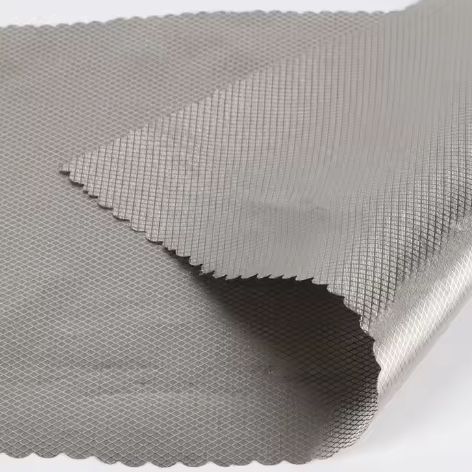
Conductive Non Woven is a versatile material that combines the flexibility and porosity of non-woven fabrics with the electrical conductivity of conductive materials. It is typically made by impregnating or coating a non-woven substrate with conductive polymers, metals, or carbon-based materials. The resulting material exhibits a range of electrical properties, including low surface resistance, high conductivity, and good electromagnetic shielding effectiveness.
One of the key advantages of Conductive Non Woven is its flexibility and conformability. Unlike rigid conductive materials such as metals, Conductive Non Woven can be easily cut, shaped, and molded to fit a variety of applications. This makes it ideal for use in flexible electronics, wearable devices, and other applications where traditional conductive materials may not be suitable.
Another important property of Conductive Non Woven is its porosity. The open structure of the non-woven fabric allows for the passage of air, moisture, and other fluids, which can be beneficial in applications where breathability or fluid management is required. This makes Conductive Non Woven a popular choice for use in medical textiles, filtration applications, and other areas where the material needs to interact with its environment.
Potential Applications of Conductive Non Woven in RFID Technology
Given its unique properties, Conductive Non Woven has several potential applications in RFID technology. One of the most promising areas is in the development of flexible RFID tags. Traditional RFID tags are typically made using rigid substrates such as paper or plastic, which can limit their flexibility and conformability. By using Conductive Non Woven as the substrate for RFID tags, it is possible to create tags that can be bent, folded, and stretched without losing their functionality. This makes them ideal for use in applications such as smart clothing, flexible packaging, and other areas where traditional RFID tags may not be suitable.
In addition to its use as a substrate for RFID tags, Conductive Non Woven can also be used as an antenna material. The conductive properties of the material allow it to efficiently transmit and receive radio frequencies, making it a viable alternative to traditional antenna materials such as copper or aluminum. By using Conductive Non Woven as the antenna material, it is possible to create RFID tags that are lightweight, flexible, and cost-effective.
Another potential application of Conductive Non Woven in RFID technology is in the area of electromagnetic shielding. RFID systems can be susceptible to interference from external electromagnetic fields, which can affect their performance and reliability. By using Conductive Non Woven as a shielding material, it is possible to reduce the effects of electromagnetic interference and improve the performance of RFID systems. This makes it a valuable component in applications such as RFID readers, smart shelves, and other areas where electromagnetic shielding is required.
Challenges and Considerations
While Conductive Non Woven has several potential applications in RFID technology, there are also some challenges and considerations that need to be addressed. One of the main challenges is the optimization of the electrical properties of the material. The conductivity of Conductive Non Woven can vary depending on a number of factors, including the type and concentration of the conductive material, the manufacturing process, and the environmental conditions. In order to ensure the reliable performance of RFID tags and systems, it is important to carefully control these factors and optimize the electrical properties of the material.
Another challenge is the durability and stability of Conductive Non Woven. The conductive properties of the material can degrade over time due to factors such as oxidation, moisture, and mechanical stress. In order to ensure the long-term performance of RFID tags and systems, it is important to choose a Conductive Non Woven material that is resistant to these factors and has good durability and stability.
Conclusion
In conclusion, Conductive Non Woven has significant potential for use in RFID technology. Its unique properties, including flexibility, conformability, porosity, and electrical conductivity, make it a versatile material that can be used in a variety of applications. While there are some challenges and considerations that need to be addressed, the benefits of using Conductive Non Woven in RFID technology are clear.
As a leading supplier of Conductive Non Woven, we are committed to providing high-quality products that meet the needs of our customers in the RFID industry. Our Conductive Non Woven materials are carefully engineered to provide optimal electrical performance, durability, and stability, making them ideal for use in a wide range of RFID applications.
If you are interested in learning more about our Conductive Non Woven products and their potential applications in RFID technology, please do not hesitate to contact us. We would be happy to discuss your specific requirements and provide you with more information about our products and services. Let's work together to explore the exciting possibilities of using Conductive Non Woven in RFID technology and drive innovation in this dynamic field.
References
- "RFID Handbook: Fundamentals and Applications in Contactless Smart Cards, Radio Frequency Identification and Near-Field Communication" by Klaus Finkenzeller
- "Conductive Polymers: Fundamentals and Applications - A Practical Approach" by Terence A. Skotheim and Jacob R. Reynolds
- "Nonwoven Fabrics: Structure, Properties, and Applications" by Richard K. Russell and W. C. Houser