


Porosity in metal composite materials is a critical factor that significantly impacts their mechanical properties, corrosion resistance, and overall performance. As a reputable metal composite material supplier, I understand the importance of controlling porosity to meet the diverse needs of our customers across various industries. In this blog post, I will delve into the methods and strategies we employ to effectively control porosity in metal composite materials.
Understanding Porosity in Metal Composite Materials
Porosity refers to the presence of voids or pores within a material. In metal composite materials, porosity can arise from several sources, including gas entrapment during the manufacturing process, shrinkage during solidification, and the presence of impurities. These pores can vary in size, shape, and distribution, and their presence can have a detrimental effect on the material's properties.
For instance, porosity can reduce the material's strength and ductility, making it more susceptible to cracking and failure under stress. It can also increase the material's permeability, allowing corrosive agents to penetrate the material and cause corrosion. Additionally, porosity can affect the material's thermal and electrical conductivity, as well as its surface finish and appearance.
Factors Affecting Porosity
Before discussing the methods of controlling porosity, it is essential to understand the factors that contribute to its formation. Some of the key factors include:
- Material Composition: The type and proportion of metals and other components in the composite material can influence porosity. For example, certain alloys may have a higher tendency to form pores due to their chemical reactions during the manufacturing process.
- Manufacturing Process: The method used to produce the metal composite material plays a significant role in porosity formation. Processes such as casting, powder metallurgy, and welding can introduce gas bubbles or voids into the material if not properly controlled.
- Processing Parameters: Parameters such as temperature, pressure, and cooling rate can affect the solidification process and, consequently, the porosity of the material. For example, rapid cooling can lead to the formation of small, dispersed pores, while slow cooling can result in larger, more interconnected pores.
- Impurities and Contaminants: The presence of impurities or contaminants in the raw materials can also contribute to porosity. These impurities can react with the metal matrix or act as nucleation sites for pore formation.
Methods of Controlling Porosity
As a metal composite material supplier, we employ a combination of techniques to control porosity and ensure the quality of our products. Some of the key methods include:
Material Selection and Preparation
- High-Quality Raw Materials: We source high-quality raw materials from reliable suppliers to minimize the presence of impurities and contaminants. This helps to reduce the likelihood of pore formation during the manufacturing process.
- Material Blending and Homogenization: Proper blending and homogenization of the raw materials are essential to ensure a uniform distribution of the components in the composite material. This helps to prevent the formation of local regions with high porosity.
- Pre-Treatment of Raw Materials: In some cases, we may pre-treat the raw materials to remove any surface oxides or contaminants that could contribute to porosity. This can involve processes such as cleaning, degreasing, and heat treatment.
Manufacturing Process Optimization
- Casting Techniques: In casting processes, we use techniques such as vacuum casting or pressure casting to reduce gas entrapment and improve the filling of the mold. Vacuum casting involves removing the air from the mold cavity before pouring the molten metal, while pressure casting applies external pressure to force the metal into the mold and eliminate voids.
- Powder Metallurgy: In powder metallurgy, we carefully control the powder characteristics, such as particle size, shape, and distribution, to ensure good compaction and sintering. We also use techniques such as hot isostatic pressing (HIP) to densify the powder compact and reduce porosity.
- Welding and Joining: When welding or joining metal composite materials, we use appropriate welding techniques and parameters to minimize the formation of pores and cracks. This may involve using shielding gases to prevent oxidation and controlling the welding speed and heat input.
Process Monitoring and Control
- Non-Destructive Testing (NDT): We use non-destructive testing techniques such as ultrasonic testing, X-ray inspection, and computed tomography (CT) scanning to detect and quantify porosity in our products. This allows us to identify any potential issues early in the manufacturing process and take corrective actions.
- Process Optimization and Feedback: Based on the results of NDT and other quality control measures, we continuously optimize our manufacturing processes to reduce porosity and improve product quality. We also use feedback from our customers to identify areas for improvement and make necessary adjustments to our processes.
Post-Processing Treatments
- Hot Isostatic Pressing (HIP): HIP is a post-processing treatment that involves subjecting the metal composite material to high temperature and pressure in an inert gas environment. This helps to close any remaining pores and improve the material's density and mechanical properties.
- Heat Treatment: Heat treatment can also be used to reduce porosity and improve the material's microstructure. For example, annealing can help to relieve internal stresses and promote the diffusion of atoms, which can lead to the closure of small pores.
Case Study: Controlling Porosity in Copper Foil Plated With Nickel
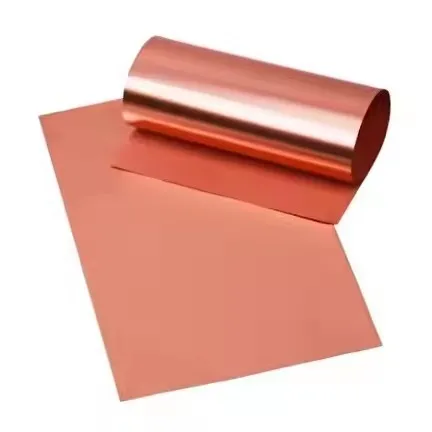
One of our popular products is Copper Foil Plated With Nickel, which is widely used in electronic applications due to its excellent electrical conductivity and corrosion resistance. To ensure the quality of this product, we have implemented a comprehensive porosity control strategy.
- Material Selection: We use high-purity copper foil and nickel plating materials to minimize the presence of impurities and contaminants. The copper foil is carefully selected for its uniform thickness and smooth surface finish, which helps to ensure a consistent plating quality.
- Plating Process Optimization: We have optimized our plating process to minimize the formation of pores and voids in the nickel layer. This involves controlling the plating parameters such as temperature, pH, and current density to ensure a uniform and dense plating.
- Quality Control: We use a combination of NDT techniques and visual inspection to monitor the porosity of the Copper Foil Plated With Nickel. Any products that do not meet our quality standards are rejected and reprocessed to ensure that only high-quality products are delivered to our customers.
Conclusion
Controlling porosity in metal composite materials is a complex but essential task that requires a thorough understanding of the factors affecting porosity and the use of appropriate techniques and strategies. As a metal composite material supplier, we are committed to providing our customers with high-quality products that meet their specific requirements. By implementing a comprehensive porosity control strategy, we can ensure the reliability and performance of our metal composite materials in a wide range of applications.
If you are interested in learning more about our metal composite materials or have specific requirements regarding porosity control, please feel free to contact us for a consultation. We look forward to working with you to meet your needs and provide you with the best possible solutions.

References
-ASM Handbook, Volume 2: Properties and Selection: Nonferrous Alloys and Special-Purpose Materials. ASM International, 2001.
-Schwartz, M. M. (2004). Composite Materials Handbook. McGraw-Hill Professional.
-Zhang, Y., & Chen, X. (2018). Porosity Control in Metal Matrix Composites: A Review. Journal of Materials Science and Technology, 34(11), 2011-2022.