


Hey there! As a supplier of Plain Conductive Cloth, I often get asked about how this nifty material conducts electricity. So, I thought I'd sit down and write a blog post to share all the ins and outs of it.
First off, let's talk about what plain conductive cloth actually is. It's a type of fabric that has been treated or coated with conductive materials to give it the ability to carry an electrical current. This makes it super useful in a whole bunch of applications, from electronics to shielding against electromagnetic interference (EMI).
Now, onto the main question: how does it conduct electricity? Well, it all comes down to the conductive materials used in the cloth. There are a few different types of materials that can be used, but the most common ones are metals like silver, copper, and nickel. These metals are great conductors of electricity because they have a lot of free electrons that can move easily through the material.
When the conductive material is applied to the cloth, it forms a network of conductive paths. These paths allow the electrons to flow freely through the fabric, creating an electrical current. The more conductive material there is on the cloth, the better it will conduct electricity.
One of the most popular types of conductive cloth is Silver Conductive Fabric. Silver is an excellent conductor of electricity, and it also has some other great properties, like being resistant to corrosion. This makes silver conductive fabric a great choice for applications where you need a high level of conductivity and durability.
Another type of conductive cloth is Checked Conductive Cloth. This type of cloth has a pattern of conductive and non-conductive areas, which can be useful for creating circuits or shielding specific areas. The conductive areas allow the electricity to flow, while the non-conductive areas prevent it from spreading where it's not needed.
Conductive Cloth Tape is also a popular product. It's basically a strip of conductive cloth with an adhesive backing, which makes it easy to apply to different surfaces. Conductive cloth tape can be used for a variety of purposes, like grounding, shielding, and making electrical connections.

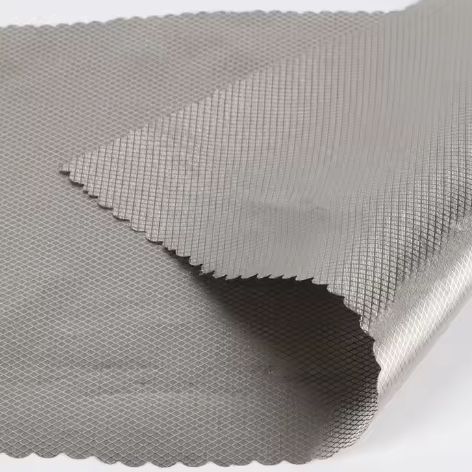
Now, let's take a closer look at how the conductive material is applied to the cloth. There are a few different methods that can be used, but the most common ones are coating and laminating.
Coating involves applying a thin layer of conductive material to the surface of the cloth. This can be done using a variety of techniques, like spraying, dipping, or printing. The advantage of coating is that it's a relatively simple and cost-effective method, and it can be used to apply a wide range of conductive materials.
Laminating, on the other hand, involves bonding a layer of conductive material to the cloth using an adhesive. This method is typically used when you need a thicker layer of conductive material or when you want to create a more durable bond. Laminating can be more expensive than coating, but it can also provide better performance in some applications.
So, there you have it! That's how plain conductive cloth conducts electricity. It's all about the conductive materials and the way they're applied to the cloth. Whether you're working on a DIY electronics project or you're looking for a solution for a commercial application, plain conductive cloth can be a great choice.
If you're interested in purchasing plain conductive cloth or any of our other conductive fabric products, we'd love to hear from you. We offer a wide range of products at competitive prices, and we're always happy to help you find the right solution for your needs. Just reach out to us and let's start a conversation about your requirements.
References
- "Conductive Textiles: Fundamentals and Applications" by Jayashree Arcot and Madhusudan Anantatmula
- "Handbook of Textile Fibre Structure" edited by David J. Spooner