


As a supplier of Copper Foil Plated With Nickel, ensuring the quality of our products is of utmost importance. One critical aspect of the quality of nickel-plated copper foil is the adhesion of the nickel plating to the copper foil. Poor adhesion can lead to various issues such as peeling, flaking, and reduced performance of the final product. In this blog post, I will share some common methods to test the adhesion of nickel plating on copper foil.
Scratch Test
The scratch test is a simple and widely used method to evaluate the adhesion of a coating. In this test, a sharp tool, such as a scalpel or a diamond-tipped stylus, is used to make a series of scratches on the surface of the nickel-plated copper foil. The scratches are made at a specific angle and with a controlled force.
The key to a successful scratch test is to ensure that the scratch is deep enough to penetrate through the nickel plating and reach the copper substrate. After making the scratches, the surface is then examined under a microscope or with the naked eye. If the nickel plating remains intact along the scratch edges without any signs of peeling or flaking, it indicates good adhesion. However, if the plating comes off easily, it suggests poor adhesion.
It is important to note that the scratch test is a qualitative method, and the results can be somewhat subjective. Different operators may apply different forces or angles when making the scratches, which can affect the test results. To minimize this variability, it is recommended to follow a standardized procedure and have multiple operators perform the test to obtain more reliable results.
Tape Test
The tape test is another straightforward and commonly used method for testing adhesion. In this test, a piece of adhesive tape, typically a pressure-sensitive tape with a defined adhesion strength, is firmly pressed onto the surface of the nickel-plated copper foil. The tape should cover an area of interest, usually a few square centimeters.
After the tape is applied, it is quickly peeled off at a 180-degree angle in a single, smooth motion. The peeled tape is then examined to see if any nickel plating has adhered to it. If there are no visible traces of the plating on the tape, it indicates good adhesion. On the other hand, if significant amounts of the plating are transferred to the tape, it suggests poor adhesion.
The tape test is relatively easy to perform and can provide a quick assessment of the adhesion quality. However, like the scratch test, it is also a qualitative method. The results can be influenced by factors such as the type of tape used, the pressure applied when applying the tape, and the speed of peeling. To ensure consistent results, it is advisable to use a specific type of tape recommended for adhesion testing and follow a standardized procedure.
Bend Test
The bend test is a more practical method that simulates the real-world conditions where the nickel-plated copper foil may be bent or deformed. In this test, a sample of the nickel-plated copper foil is bent at a specific radius and angle. The bending can be done manually using a pair of pliers or with the help of a bending machine for more precise control.
After the bending process, the bent area of the foil is carefully examined for any signs of cracking, peeling, or delamination of the nickel plating. If the plating remains intact without any visible damage, it indicates good adhesion. However, if the plating shows signs of failure, such as cracks or flaking, it suggests poor adhesion.
The bend test is useful because it can better represent the performance of the nickel-plated copper foil in applications where it may be subjected to mechanical stress. Different applications may require different bending radii and angles, so it is important to select the appropriate bending parameters based on the specific requirements of the end-use.
Cross-Cut Test
The cross-cut test is a more advanced and quantitative method for evaluating adhesion. In this test, a series of parallel cuts are made in the nickel plating using a sharp blade, typically a multi-blade cutter. The cuts are made at a specific spacing, usually 1 mm or 2 mm apart, to form a grid pattern.
After the parallel cuts are made, another set of cuts is made perpendicular to the first set, creating a grid of small squares on the surface of the plating. A piece of adhesive tape is then applied over the grid and peeled off in the same manner as in the tape test. The number of squares that have lost the plating is counted, and the adhesion is rated based on a predefined scale.
For example, if none of the squares have lost the plating, the adhesion is rated as excellent. If only a few squares show some minor loss of plating, the adhesion may be rated as good. A higher number of squares with significant plating loss indicates poorer adhesion.
The cross-cut test provides a more detailed and quantitative assessment of the adhesion quality compared to the scratch or tape test. It is widely used in industries where high-quality adhesion is critical, such as the electronics and automotive industries.
Environmental Testing
In addition to the mechanical tests mentioned above, environmental testing can also be used to evaluate the long-term adhesion of the nickel plating on copper foil. Environmental factors such as temperature, humidity, and chemical exposure can affect the adhesion over time.
For example, a thermal cycling test can be conducted by subjecting the nickel-plated copper foil to repeated cycles of high and low temperatures. The temperature range and the number of cycles can be defined based on the expected operating conditions of the final product. After the thermal cycling, the adhesion of the plating can be tested using one of the methods described above.
A humidity test can also be performed by exposing the samples to a high-humidity environment for a certain period of time. High humidity can cause corrosion or oxidation at the interface between the nickel plating and the copper foil, which may affect the adhesion. Similar to the thermal cycling test, the adhesion is then evaluated after the humidity exposure.
Chemical exposure tests can be carried out by immersing the samples in specific chemicals or solutions that the product is likely to encounter in its application. For example, if the nickel-plated copper foil is used in a battery application, it may be tested in electrolyte solutions. After the chemical exposure, the adhesion is assessed to determine if the chemicals have had any negative impact on it.
Conclusion
Testing the adhesion of nickel plating on copper foil is crucial for ensuring the quality and performance of our products as a Copper Foil Plated With Nickel supplier. By using a combination of different testing methods, including scratch tests, tape tests, bend tests, cross-cut tests, and environmental testing, we can obtain a comprehensive understanding of the adhesion quality.
Each testing method has its own advantages and limitations, and the choice of method depends on various factors such as the specific requirements of the application, the available testing equipment, and the level of accuracy needed. It is important to follow standardized procedures and have proper quality control measures in place to ensure reliable and reproducible test results.

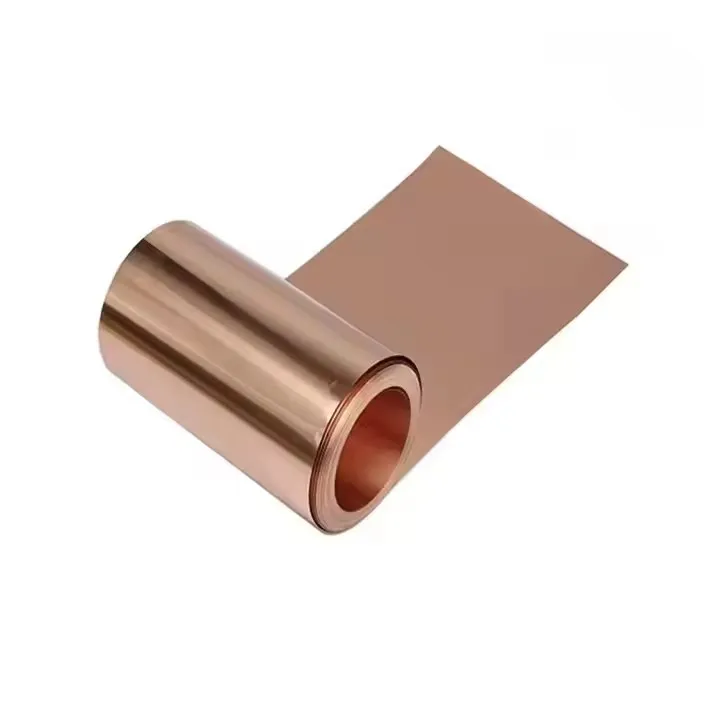
If you are interested in our Copper Foil Plated With Nickel products or have any questions about the adhesion testing or other aspects of our products, please feel free to contact us for further discussion and potential procurement. We are committed to providing high-quality products and excellent customer service to meet your needs.
References
- ASTM D3359 - Standard Test Methods for Measuring Adhesion by Tape Test
- ISO 2409 - Paints and varnishes -- Cross-cut test
- ASM Handbook, Volume 5: Surface Engineering, ASM International