


Creep is a phenomenon where materials undergo slow and progressive deformation under a constant load over an extended period, especially at elevated temperatures. Metal composite materials, which combine the advantages of different metals, have unique creep properties that make them suitable for various high - performance applications. As a metal composite material supplier, I'd like to delve into the creep properties of these materials in this blog.
Understanding Creep in Metal Composite Materials
Creep in metal composite materials can be divided into three main stages: primary creep, secondary creep, and tertiary creep.
During the primary creep stage, the deformation rate is relatively high at the beginning but gradually decreases over time. This is due to work - hardening mechanisms within the material. As the composite is subjected to stress, dislocations are generated and interact with each other, causing an increase in the material's resistance to deformation. In metal composites, the different phases and their interfaces play a crucial role. For example, in a composite made of a metal matrix and ceramic reinforcements, the ceramic particles can act as barriers to dislocation movement, which affects the initial creep rate.
The secondary creep stage is characterized by a relatively constant deformation rate. This is the most important stage for engineering applications as it often represents the long - term behavior of the material under service conditions. In metal composites, the balance between work - hardening and recovery processes determines the creep rate in this stage. Recovery mechanisms, such as dynamic recrystallization and dislocation climb, can counteract the work - hardening effect. The presence of different phases in the composite can either enhance or suppress these recovery processes. For instance, if the reinforcement phase has a high melting point and good thermal stability, it can restrict the movement of dislocations and slow down the recovery, resulting in a lower creep rate.
The tertiary creep stage is marked by an accelerating deformation rate, which eventually leads to failure. This can be caused by several factors, such as the formation of voids and cracks within the material, the coarsening of the microstructure, and the breakdown of the reinforcement - matrix interface. In metal composites, the interface between the different components is a critical region. If the interface bonding is weak, it can lead to premature failure during the tertiary creep stage.
Factors Affecting the Creep Properties of Metal Composite Materials
Temperature
Temperature is one of the most significant factors affecting creep in metal composite materials. As the temperature increases, the atomic mobility within the material also increases. This facilitates the movement of dislocations and the occurrence of diffusion - controlled processes, such as creep. In metal composites, the different components may have different thermal expansion coefficients. At high temperatures, the mismatch in thermal expansion can generate internal stresses at the interfaces, which can accelerate the creep process. For example, in a metal - ceramic composite, if the ceramic reinforcement has a lower thermal expansion coefficient than the metal matrix, thermal stresses will be induced during heating, which can lead to micro - cracking at the interface and increase the creep rate.
Stress Level
The applied stress also has a profound impact on the creep properties of metal composite materials. Higher stress levels generally result in higher creep rates. In metal composites, the stress is distributed between the different phases according to their mechanical properties. The reinforcement phase usually has a higher strength than the matrix, so it can carry a significant portion of the applied stress. However, if the stress exceeds the strength of the reinforcement or the interface between the reinforcement and the matrix, damage can occur, leading to an increase in the creep rate.
Microstructure
The microstructure of metal composite materials, including the size, shape, and distribution of the different phases, has a direct influence on creep. Smaller reinforcement particles generally provide better creep resistance because they can more effectively impede dislocation movement. The shape of the reinforcement also matters. For example, fibrous reinforcements can provide better load - bearing capacity and creep resistance compared to spherical particles, as they can align in the direction of the applied stress. Additionally, a uniform distribution of the reinforcement phase throughout the matrix can ensure a more consistent stress distribution and better creep performance.
Composition
The composition of metal composite materials is another important factor. Different combinations of metals and reinforcements can result in different creep properties. For example, adding alloying elements to the metal matrix can change its mechanical and thermal properties, which in turn affect the creep behavior. Some alloying elements can form precipitates that can pin dislocations and improve the creep resistance. The type of reinforcement also plays a crucial role. Ceramic reinforcements, such as silicon carbide or alumina, are commonly used in metal composites because of their high strength and thermal stability, which can enhance the creep resistance of the composite.
Applications of Metal Composite Materials Based on Their Creep Properties
The unique creep properties of metal composite materials make them suitable for a wide range of applications.
Aerospace Industry
In the aerospace industry, components are often subjected to high temperatures and stresses for long periods. Metal composite materials with good creep resistance are used in engine components, such as turbine blades and combustion chambers. For example, nickel - based metal composites reinforced with ceramic particles can withstand the high - temperature and high - stress conditions in jet engines, ensuring reliable performance over extended service lives.
Automotive Industry
In the automotive industry, metal composite materials are used in engine parts, such as pistons and cylinder liners. These components need to have good creep resistance to maintain their dimensional stability under the high - temperature and high - stress conditions generated during engine operation. Metal - ceramic composites can provide the necessary strength and creep resistance, improving the efficiency and durability of automotive engines.
Energy Industry
In the energy industry, metal composite materials are used in power generation equipment, such as nuclear reactors and gas turbines. Components in these systems are exposed to high temperatures and long - term loading. Metal composites with excellent creep properties can ensure the safe and reliable operation of these power generation facilities.
Our Offerings as a Metal Composite Material Supplier
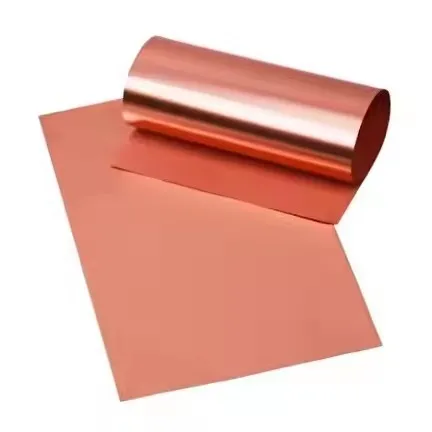
As a metal composite material supplier, we offer a wide range of products with excellent creep properties. One of our popular products is Copper Foil Plated With Nickel. This composite material combines the high electrical conductivity of copper with the corrosion resistance and high - temperature stability of nickel. It has good creep resistance, making it suitable for applications in electronics and electrical engineering, where components need to maintain their shape and performance under long - term stress and elevated temperatures.
We also provide customized metal composite materials based on our customers' specific requirements. Our team of experts can work closely with you to select the appropriate composition, microstructure, and processing methods to achieve the desired creep properties for your application. Whether you need a material for high - temperature aerospace components or long - lasting automotive parts, we have the expertise and resources to meet your needs.

Contact Us for Procurement and洽谈
If you are interested in our metal composite materials or have any questions about their creep properties, please feel free to contact us. We are always ready to provide you with detailed product information, technical support, and competitive pricing. Our goal is to help you find the best metal composite material solutions for your applications.
References
- Ashby, M. F., & Jones, D. R. H. (2005). Engineering Materials 2: An Introduction to Microstructures, Processing, and Design. Butterworth - Heinemann.
- Dieter, G. E. (1986). Mechanical Metallurgy. McGraw - Hill.
- Hull, D., & Clyne, T. W. (1996). An Introduction to Composite Materials. Cambridge University Press.