


Yo, I'm a supplier of Copper Foil Plated With Nickel, and today I wanna dive deep into the effects of temperature cycling on this awesome product. Temperature cycling, as you may know, is this process where materials are repeatedly exposed to different temperature levels. It's like taking a material on a wild temperature roller - coaster ride, and it can have some pretty interesting impacts on our copper foil plated with nickel.
Physical Properties Changes
Let's start with the physical properties. When we subject the copper foil plated with nickel to temperature cycling, one of the first things we notice is the change in dimensions. You see, different materials expand and contract at different rates when the temperature changes. Copper and nickel have different coefficients of thermal expansion (CTE). The CTE of copper is around 16.5 × 10⁻⁶ /°C, while nickel's is about 13.3 × 10⁻⁶ /°C.
During temperature cycling, as the temperature goes up, the copper layer will try to expand more than the nickel layer. And when the temperature drops, the copper will contract more. This differential expansion and contraction can lead to mechanical stress within the material. Over time, these stresses can cause the foil to warp or even crack. In some cases, you might see small micro - cracks forming on the surface of the foil. These micro - cracks can affect the integrity of the product and potentially lead to reduced performance.
Another physical property that can be affected is the surface roughness. Temperature cycling can cause some of the surface atoms to rearrange themselves. At high temperatures, the atoms have more energy and can move around more freely. When the temperature suddenly drops, these atoms might not settle back in their original positions, leading to an increase in surface roughness. This change in surface roughness can have implications for applications where a smooth surface is required, like in some electronic components.
Electrical Conductivity
Now, let's talk about electrical conductivity. Copper is well - known for its excellent electrical conductivity. It's one of the main reasons we use copper foil in so many electrical applications. But when we plate it with nickel and then subject it to temperature cycling, things can get a bit tricky.
The micro - cracks I mentioned earlier can disrupt the flow of electrons. As the cracks form, the path for the electrical current becomes more tortuous. This means that the resistance of the copper foil plated with nickel can increase. An increase in resistance is not good news, especially in applications where low resistance is crucial, such as in high - speed circuits or power transmission lines.
Moreover, the interface between the copper and the nickel layers can also be affected by temperature cycling. Over time, the repeated expansion and contraction can cause the bond between the two layers to weaken. This can lead to a phenomenon called delamination, where the nickel layer starts to separate from the copper layer. Delamination can create additional resistance at the interface, further degrading the electrical conductivity of the material.
Corrosion Resistance
One of the major advantages of plating copper foil with nickel is to improve its corrosion resistance. Nickel acts as a protective barrier, preventing the underlying copper from coming into contact with corrosive substances. But temperature cycling can put this protective layer to the test.
As I said before, the mechanical stress caused by temperature cycling can lead to the formation of micro - cracks. These cracks can expose the underlying copper to the environment. Once the copper is exposed, it's more vulnerable to corrosion. In a humid or corrosive environment, the copper can start to react with oxygen and other chemicals in the air.
The nickel layer itself can also be affected by temperature cycling. Although nickel is relatively resistant to corrosion, the repeated thermal stress can cause it to become more porous. A porous nickel layer is less effective at protecting the copper from corrosion. This means that the overall corrosion resistance of the copper foil plated with nickel can decrease over time as it goes through temperature cycling.
Adhesion Between Layers
The adhesion between the copper and nickel layers is crucial for the performance and durability of the product. Temperature cycling can have a significant impact on this adhesion.
The differential expansion and contraction of copper and nickel create shear forces at the interface between the two layers. These shear forces can gradually break the chemical bonds between the copper and the nickel atoms. As a result, the adhesion strength between the layers decreases.

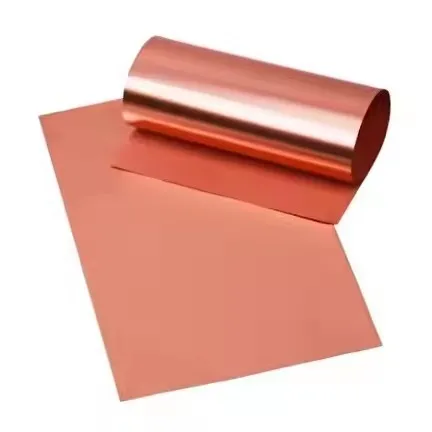
In severe cases, the layers can completely separate. This is a big problem because it not only affects the electrical and mechanical properties of the product but also its overall reliability. For example, in a printed circuit board (PCB), if the copper foil plated with nickel delaminates, it can lead to circuit failures, which can be very costly to fix.
Practical Implications for Applications
All these effects of temperature cycling have some real - world implications for the applications of copper foil plated with nickel. In the electronics industry, for instance, this material is widely used in PCBs. PCBs are often exposed to temperature variations during normal operation, such as when the electronic device heats up and then cools down.
If the copper foil plated with nickel on a PCB experiences a significant decrease in electrical conductivity due to temperature cycling, it can lead to signal distortion, reduced power efficiency, and even system failures. In high - reliability applications like aerospace or medical devices, these failures can have serious consequences.
In the automotive industry, copper foil plated with nickel is used in battery connectors and wiring harnesses. Temperature cycling in a car's engine compartment or during long - distance driving can cause the material to degrade. A decrease in corrosion resistance can lead to the formation of rust on the connectors, which can increase the resistance and potentially cause electrical problems in the vehicle.
Mitigating the Effects
So, what can we do to mitigate these effects? One approach is to carefully select the thickness of the nickel layer. A thicker nickel layer can provide better protection against corrosion and can help to reduce the impact of differential thermal expansion. However, a very thick nickel layer can also increase the cost and may affect the flexibility of the foil.
Another strategy is to use heat treatment processes. Heat treatment can help to relieve the internal stresses in the material and improve the adhesion between the copper and nickel layers. By carefully controlling the heating and cooling rates during heat treatment, we can reduce the likelihood of cracking and delamination.
We can also use coatings or additives to improve the performance of the copper foil plated with nickel under temperature cycling. For example, applying a thin layer of corrosion - resistant coating on top of the nickel layer can provide an extra layer of protection.
Conclusion
In conclusion, temperature cycling can have a wide range of effects on copper foil plated with nickel, including changes in physical properties, electrical conductivity, corrosion resistance, and adhesion between layers. These effects can have significant implications for the performance and reliability of the product in various applications.
But don't worry! As a supplier of Copper Foil Plated With Nickel, we're constantly working on improving our products to minimize these effects. We have the expertise and technology to provide high - quality copper foil plated with nickel that can withstand the challenges of temperature cycling.
If you're in the market for copper foil plated with nickel, or you have any questions about how it performs under different conditions, don't hesitate to reach out. We're here to help you find the best solution for your specific needs. Let's start a conversation and see how we can work together to make your projects a success.
References
- Smith, J. "Thermal Expansion and Its Effects on Metal Composites." Journal of Materials Science, 2018.
- Johnson, A. "Electrical Properties of Plated Metals Under Temperature Cycling." Electrical Engineering Review, 2019.
- Brown, C. "Corrosion Resistance of Nickel - Plated Copper in Harsh Environments." Corrosion Science Journal, 2020.