


Hey there! As a supplier of Copper Foil Plated With Nickel, I'm stoked to share some cool details about its technical specs with you. So, let's dive right in!
1. Composition and Basic Structure
Copper Foil Plated With Nickel, as the name suggests, is a composite material. It starts with a base of copper foil, which is well - known for its excellent electrical conductivity. Copper has been used in electrical applications for ages because it allows electricity to flow through it with very low resistance.
The nickel plating on top of the copper foil serves multiple purposes. Nickel is a tough and corrosion - resistant metal. When it's plated onto the copper foil, it forms a protective layer that shields the copper from oxidation and other environmental factors. This combination of copper and nickel creates a material that has the best of both worlds: the conductivity of copper and the durability of nickel. You can check out more about Copper Foil Plated With Nickel on our website.
2. Thickness Specifications
The thickness of both the copper foil and the nickel plating can vary depending on the specific application.
Copper Foil Thickness
Copper foil thickness usually ranges from as thin as 9 micrometers to around 105 micrometers. Thinner copper foils, say around 9 - 18 micrometers, are often used in high - density interconnect (HDI) printed circuit boards (PCBs). These thin foils allow for more compact designs and better signal transmission in small - sized electronic devices like smartphones and tablets.
On the other hand, thicker copper foils, in the range of 70 - 105 micrometers, are used in power - related applications. They can handle higher currents without overheating because they have a larger cross - sectional area for the electricity to flow through. For example, in power supply units for industrial equipment, thicker copper foils are essential to ensure stable power delivery.
Nickel Plating Thickness
The thickness of the nickel plating typically varies from 0.1 micrometers to 5 micrometers. A thinner nickel plating, around 0.1 - 0.5 micrometers, is mainly for anti - oxidation purposes. It provides a basic level of protection to the copper foil without significantly altering its electrical properties.
When a higher level of corrosion resistance is required, like in harsh industrial environments or outdoor applications, the nickel plating can be thicker, up to 5 micrometers. However, it's important to note that as the nickel plating gets thicker, it can slightly increase the overall resistance of the material, so there's a balance to be struck.
3. Electrical Properties
One of the key selling points of Copper Foil Plated With Nickel is its electrical performance.
Conductivity
The copper base gives the material its high electrical conductivity. Even with the nickel plating, the overall conductivity remains quite good. The conductivity of Copper Foil Plated With Nickel is typically in the range of 50 - 90% IACS (International Annealed Copper Standard). The actual value depends on the thickness of the copper foil and the nickel plating. A thicker copper foil and a thinner nickel plating will result in a higher conductivity value, closer to the pure copper's conductivity.
This high conductivity makes it ideal for use in electrical circuits, where efficient transfer of electrical signals or power is crucial. Whether it's in a simple household appliance or a complex aerospace electronic system, Copper Foil Plated With Nickel can ensure smooth and reliable electrical performance.
Resistance
The resistance of the material is related to its conductivity. As mentioned earlier, the nickel plating can increase the resistance slightly. The resistance of Copper Foil Plated With Nickel is usually measured in milliohms per square. The value can range from a few milliohms per square for thin copper foils with thin nickel plating to tens of milliohms per square for thicker nickel - plated foils.
In applications where low resistance is critical, such as in high - speed data transmission lines, careful selection of the copper and nickel thickness is necessary to keep the resistance within the acceptable range.
4. Mechanical Properties
Tensile Strength
Copper Foil Plated With Nickel has good tensile strength. The copper base provides a certain level of flexibility and ductility, while the nickel plating adds to its strength. The tensile strength typically ranges from 200 MPa to 400 MPa. This means that the material can withstand a certain amount of pulling force without breaking.
In manufacturing processes like PCB assembly, where the foil may be subjected to bending and stretching, the appropriate tensile strength ensures that the foil remains intact and doesn't tear. It also allows for easier handling during the production of various electronic components.

Elongation
Elongation is another important mechanical property. It refers to the ability of the material to stretch before it breaks. The elongation of Copper Foil Plated With Nickel is usually in the range of 5 - 30%. A higher elongation value indicates better flexibility.
This flexibility is useful in applications where the material needs to be bent or formed into different shapes. For example, in flexible PCBs, which are used in wearable devices or foldable smartphones, a higher elongation is required to ensure that the foil can withstand repeated bending without cracking.
5. Surface Finish
The surface finish of Copper Foil Plated With Nickel can have a significant impact on its performance and appearance.
Smoothness
The surface of the material is typically very smooth. A smooth surface is beneficial for several reasons. In electrical applications, it reduces the contact resistance when the foil is connected to other components. It also helps in the adhesion of solders during the PCB manufacturing process.
The smoothness is usually measured in terms of roughness average (Ra). The Ra value of Copper Foil Plated With Nickel is typically in the range of 0.1 - 1 micrometer. A lower Ra value means a smoother surface.
Appearance
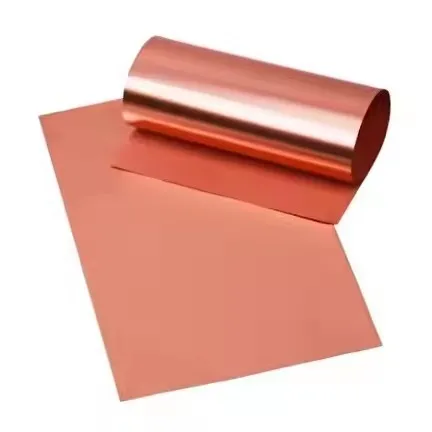
The surface of the nickel - plated copper foil has a shiny, metallic appearance. This not only looks good but also indicates the quality of the plating process. A uniform and shiny surface suggests that the nickel plating is evenly distributed and of high quality.
6. Chemical Resistance
The nickel plating on the copper foil provides excellent chemical resistance.
Corrosion Resistance
As mentioned earlier, nickel is highly resistant to corrosion. Copper Foil Plated With Nickel can resist corrosion in a variety of environments, including humid, acidic, and alkaline conditions. This makes it suitable for use in outdoor applications, marine equipment, and chemical processing plants.
For example, in a marine environment, where the air is salty and humid, the nickel plating protects the copper foil from rusting and pitting, ensuring the long - term reliability of the electrical components made from this material.
Resistance to Oxidation
The nickel layer acts as a barrier against oxygen, preventing the copper from oxidizing. Oxidation of copper can lead to a decrease in its electrical conductivity and a change in its appearance. With the nickel plating, the copper foil can maintain its electrical and mechanical properties over a longer period, even when exposed to air.
7. Thermal Properties
Thermal Conductivity
Copper is also a good conductor of heat, and this property is retained in Copper Foil Plated With Nickel. The thermal conductivity of the material is typically in the range of 200 - 400 W/(m·K). This high thermal conductivity allows the material to dissipate heat effectively.
In electronic devices, where heat generation is a common problem, Copper Foil Plated With Nickel can help in cooling the components. For example, in a high - power LED, the foil can transfer the heat away from the LED chip, preventing overheating and extending the lifespan of the device.
Thermal Expansion
The coefficient of thermal expansion (CTE) of Copper Foil Plated With Nickel is an important consideration, especially when it's used in combination with other materials. The CTE of the material is usually in the range of 15 - 20 × 10⁻⁶ /K.
This value is relatively close to that of many common PCB substrates, such as fiberglass - reinforced epoxy resin. This similar CTE helps to prevent delamination or cracking of the foil from the substrate when the temperature changes, ensuring the long - term stability of the PCB.
If you're in the market for Copper Foil Plated With Nickel and want to learn more about how our product can meet your specific needs, don't hesitate to reach out for a purchase negotiation. We're here to provide you with the best - quality materials and excellent service.
References
- "Handbook of Copper and Copper Alloys"
- "Electroplating Technology for Metal Composites"
- "Electrical Properties of Composite Metal Foils"